

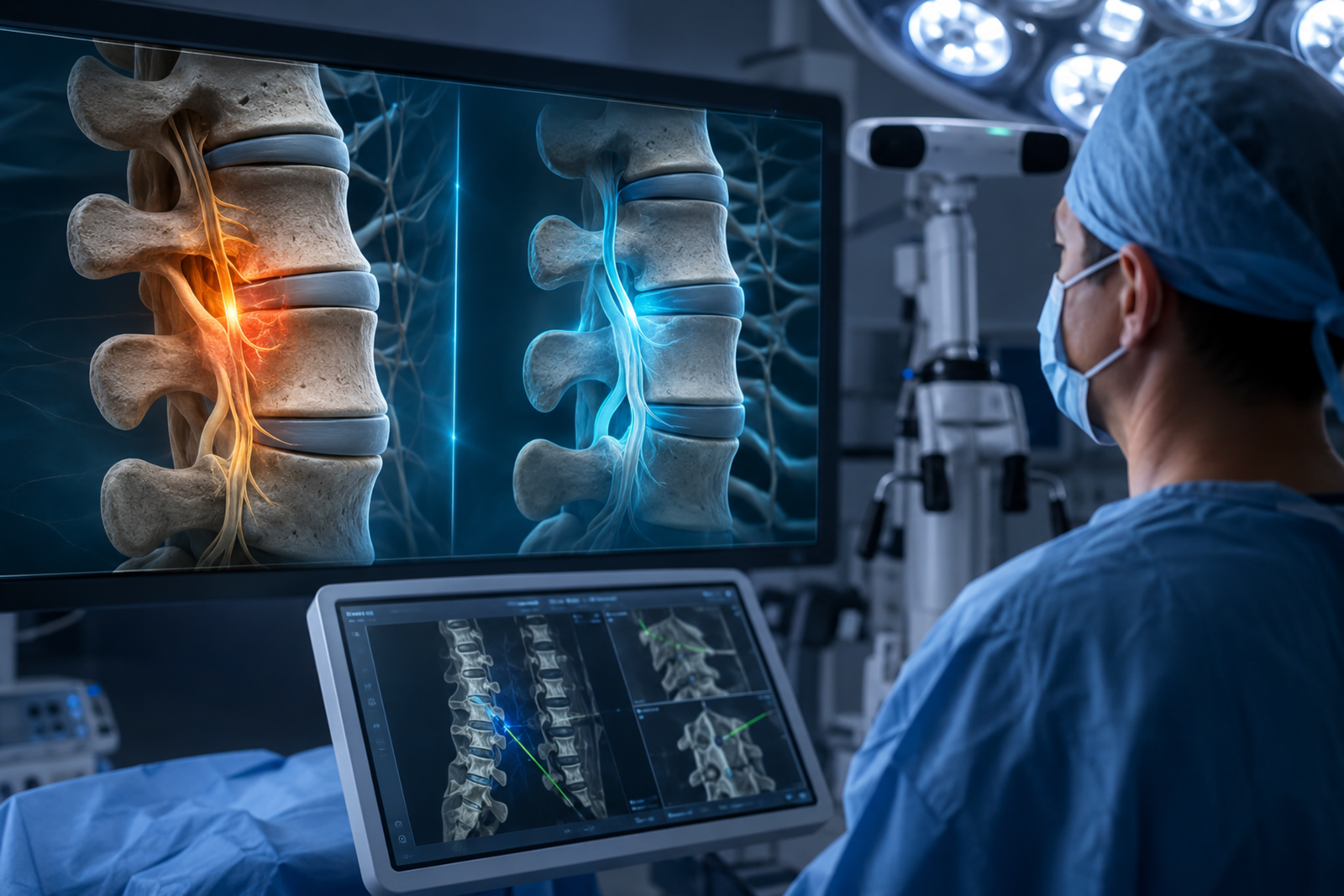
Spine Decompression Surgery is a specialized procedure designed to relieve pressure on the spinal cord or nerves caused by conditions such as spinal stenosis, herniated discs, bone overgrowth, or other structural changes. Nerve compression may lead to back or neck pain, radiating pain, numbness, tingling, weakness, or difficulty walking. The type of decompression procedure depends on the location and cause of the compression. Techniques may include laminectomy, foraminotomy, discectomy, or selected minimally invasive and endoscopic approaches. Surgery is generally considered when symptoms persist despite appropriate non-surgical treatment or when significant neurological problems are present. Detailed clinical and imaging evaluation guides treatment planning.
Spine Decompression Surgery
Spine Decompression Surgery is a specialized surgical treatment used to relieve pressure on the spinal cord or spinal nerves. Nerve compression can develop when the spaces within or around the spine become narrowed due to conditions such as spinal stenosis, herniated discs, degenerative changes, bone growth, thickened ligaments, or other structural abnormalities.
When a spinal nerve is compressed, patients may experience pain, numbness, tingling, weakness, or other neurological symptoms. In some cases, compression of the spinal cord can affect balance, coordination, walking ability, or hand function. Decompression surgery aims to create sufficient space around the affected nerve or spinal cord and address the underlying source of compression.
What Causes Spinal Nerve Compression?
Several spinal conditions can cause pressure on nerves or the spinal cord. One common cause is spinal stenosis, in which the spinal canal or nerve passageways become narrower.
A herniated or bulging disc can also press against a nearby nerve, particularly in the cervical or lumbar spine. Age-related degeneration may result in bone spurs, thickened ligaments, and changes in the facet joints, all of which can contribute to narrowing.
Spinal injuries, certain deformities, or other structural conditions may also cause nerve compression and require specialized treatment.
Symptoms of Nerve Compression
The symptoms of spinal nerve compression depend on the location and severity of the problem.
Common symptoms include:
- Neck or back pain
- Pain spreading into the arms or legs
- Numbness or tingling
- Burning or electric-like sensations
- Muscle weakness
- Difficulty standing or walking
- Reduced balance or coordination
- Hand clumsiness in certain cervical conditions
Some patients experience symptoms that become worse while standing, walking, bending, or performing specific activities.
Diagnosis and Evaluation
A detailed clinical and neurological evaluation is essential before considering decompression surgery. The spine specialist reviews the patient's symptoms, medical history, previous treatments, and functional limitations.
A physical examination may assess muscle strength, sensation, reflexes, spinal movement, coordination, and walking ability.
Imaging studies help identify the source and location of nerve compression. X-rays may be used to evaluate spinal alignment and bone structures, while MRI can provide detailed information about discs, nerves, the spinal cord, and soft tissues. CT scans may be useful for assessing bone-related narrowing and complex spinal anatomy.
The imaging findings are interpreted together with the patient's symptoms and examination to determine whether decompression is appropriate.
Non-Surgical Treatment
Surgery is not always required for spinal nerve compression. Depending on the cause and severity, initial treatment may include medication, activity modification, physiotherapy, exercise-based rehabilitation, and other conservative approaches.
Physiotherapy can help improve posture, flexibility, muscle strength, and functional movement. In selected cases, targeted injections may also be considered to help manage pain and inflammation.
If symptoms improve with conservative treatment and there is no progressive neurological problem, continued non-surgical management may be appropriate.
When Is Decompression Surgery Considered?
Decompression surgery may be considered when nerve compression causes persistent or disabling symptoms that do not improve adequately with appropriate non-surgical treatment.
It may also be considered when there is significant neurological weakness, progressive symptoms, spinal cord compression, or severe narrowing of the spinal canal or nerve passageways.
The decision for surgery is individualized. The surgeon evaluates the patient's symptoms, neurological findings, imaging results, overall health, and expected benefits before recommending treatment.
Types of Spine Decompression Surgery
Different decompression procedures may be used depending on the location and cause of compression.
Laminectomy: A portion of the vertebral bone called the lamina may be removed to create additional space within the spinal canal.
Foraminotomy: The opening through which a spinal nerve exits the spine may be enlarged to relieve pressure on the nerve.
Discectomy: A portion of a herniated disc that is compressing a nerve may be removed.
Laminotomy: Only part of the lamina is removed to provide access or create additional space while preserving as much of the normal spinal structure as possible.
In some cases, decompression may need to be combined with spinal fusion or
stabilization, particularly when spinal instability is present or when the surgical procedure is expected to affect spinal stability.
Minimally Invasive Decompression
Advances in spine surgery have made minimally invasive decompression techniques available for selected patients. These procedures use smaller incisions and specialized instruments to reach the affected area while attempting to minimize disruption to surrounding muscles and tissues.
Endoscopic decompression is another option for certain appropriately selected conditions. A small camera provides visualization of the surgical area, allowing specialized instruments to address the source of compression.
The choice between conventional, minimally invasive, and endoscopic approaches depends on the patient's anatomy, diagnosis, severity of compression, and surgical requirements.
Recovery After Surgery
Recovery following decompression surgery varies according to the procedure performed and the patient's overall health. Many patients are encouraged to begin gentle movement soon after surgery, according to their surgeon's instructions.
Physiotherapy may be recommended to improve strength, flexibility, posture, balance, and overall mobility. Patients may initially be advised to avoid heavy lifting, strenuous exercise, and movements that place excessive stress on the spine.
Follow-up appointments help monitor healing and neurological recovery.
Potential Benefits
The primary goal of decompression surgery is to relieve pressure on the spinal cord or nerves. Depending on the underlying condition, surgery may help reduce radiating pain, improve numbness or weakness, and improve walking or functional ability.
The outcome depends on several factors, including the duration and severity of nerve compression and the patient's overall health. Decompression cannot guarantee complete recovery of a nerve that has been severely or permanently damaged.
Conclusion
Spine Decompression Surgery is an important treatment option for selected patients with spinal nerve or spinal cord compression. By removing or modifying structures that are causing pressure, the procedure aims to create adequate space for the affected neural structures and address the underlying problem.
With accurate diagnosis, appropriate patient selection, and careful surgical planning, decompression can help relieve symptoms and improve neurological function. A comprehensive evaluation by an experienced spine specialist is essential to determine whether surgery is appropriate and which decompression technique best suits the patient's condition.