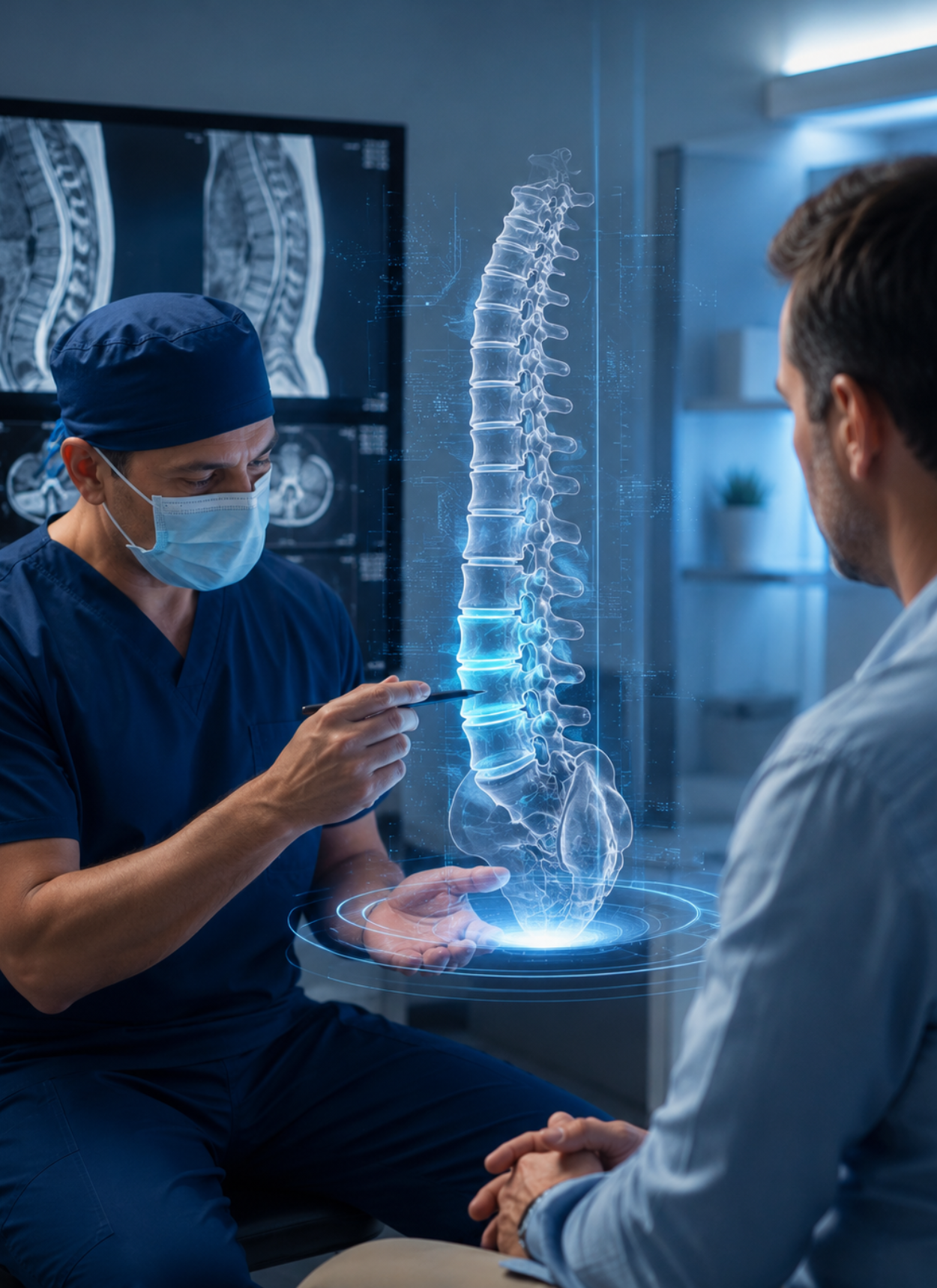

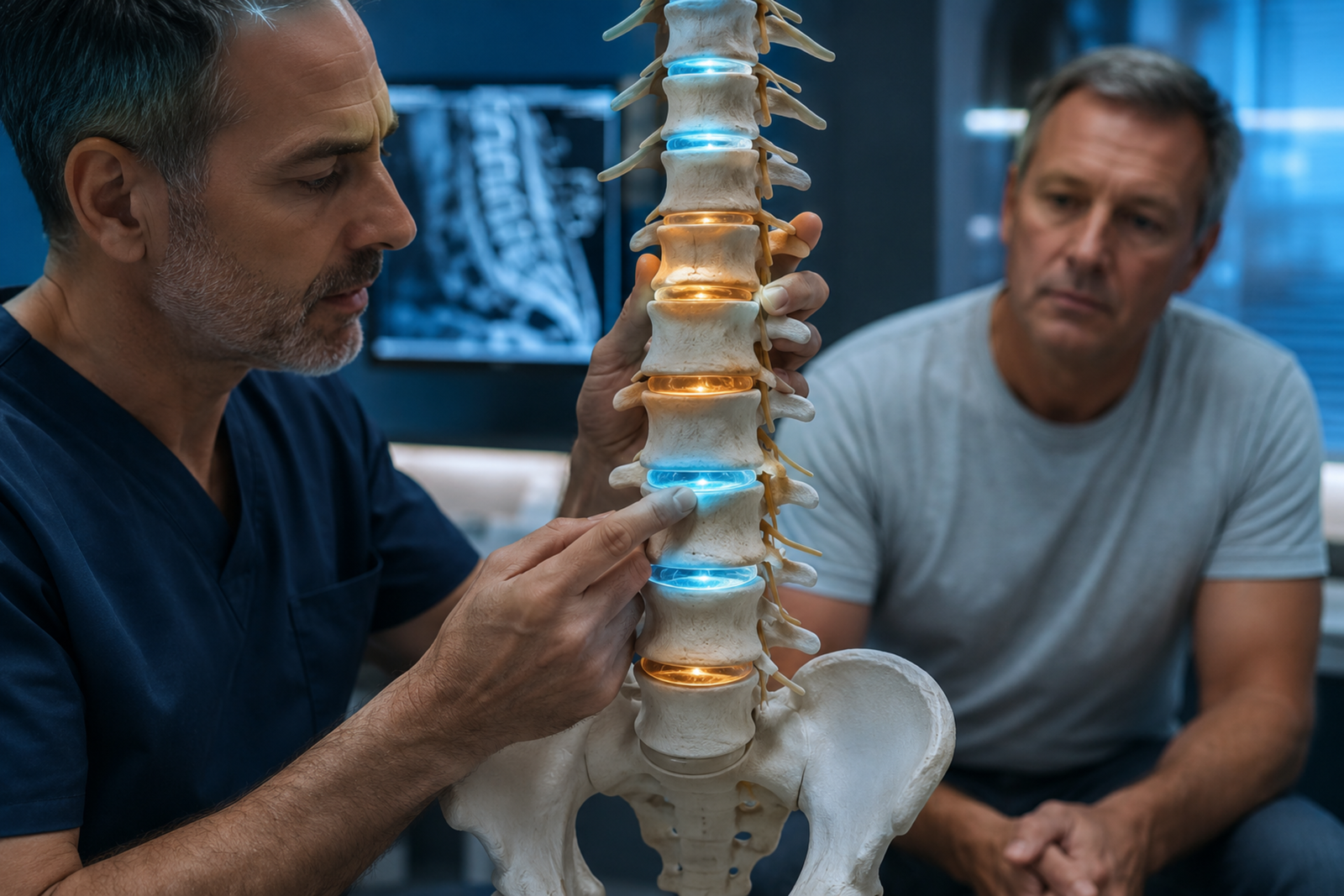
Degenerative Spine Treatment focuses on diagnosing and managing spinal conditions that develop due to age-related changes, disc wear, joint degeneration, or gradual changes in the spinal structures. These conditions may cause back pain, neck pain, stiffness, reduced mobility, numbness, tingling, or weakness when nerves become compressed. Treatment depends on the severity of symptoms and may include lifestyle modifications, medication, physiotherapy, rehabilitation, injections, or surgery when conservative treatments do not provide adequate relief. Advanced surgical options, including minimally invasive techniques, may be considered for selected patients. A detailed clinical assessment and appropriate imaging help determine the underlying cause and guide an individualized treatment plan.
Degenerative Spine Treatment
Degenerative Spine Treatment involves the diagnosis and management of spinal conditions that develop gradually due to natural aging, wear and tear, changes in the intervertebral discs, joint degeneration, or other structural changes within the spine. Degenerative changes can affect the cervical spine in the neck, thoracic spine in the upper and middle back, or lumbar spine in the lower back.
As people age, the discs between the vertebrae may gradually lose water content and elasticity. They can become thinner and less effective at absorbing stress. The facet joints and other spinal structures may also undergo changes. In some individuals, these changes can contribute to pain, stiffness, restricted movement, or pressure on nearby spinal nerves.
Not everyone with degenerative changes on an X-ray or MRI experiences symptoms. Therefore, treatment decisions should be based on a combination of symptoms, physical examination, imaging findings, and overall health.
Common Degenerative Spine Conditions
Degenerative spine problems can involve several different structures. Common conditions include degenerative disc disease, spinal stenosis, cervical spondylosis, lumbar spondylosis, facet joint degeneration, and certain forms of disc herniation.
Degenerative disc changes may cause localized neck or back pain. When degeneration contributes to narrowing around a spinal nerve, patients may experience radiating pain, numbness, tingling, or weakness in the arms or legs.
Spinal stenosis occurs when the spaces available for the spinal cord or nerves become narrowed. Depending on its location, it may cause back or neck symptoms as well as pain, heaviness, numbness, or weakness in the limbs.
Symptoms of Degenerative Spine Problems
Symptoms vary depending on the spinal region and structures involved. Common symptoms may include:
- Persistent or recurring back pain
- Neck pain and stiffness
- Pain spreading into the arms or legs
- Numbness or tingling
- Muscle weakness
- Reduced flexibility
- Difficulty standing or walking for prolonged periods
- Pain that increases with certain activities
Some patients may experience mild symptoms that improve with conservative treatment, while others may develop progressive symptoms requiring further evaluation.
Diagnosis and Evaluation
A detailed evaluation is an important first step in treating degenerative spine conditions. The spine specialist reviews the patient's symptoms, medical history, duration of pain, previous treatments, and any neurological symptoms.
A physical examination may assess spinal movement, muscle strength, sensation, reflexes, and other neurological functions. Depending on the symptoms, imaging investigations such as X-rays, MRI scans, or CT scans may be recommended.
MRI is particularly useful for assessing discs, nerves, the spinal canal, and other soft tissues. Imaging findings are interpreted alongside the patient's symptoms because structural changes on an MRI do not always indicate that surgery is required.
Non-Surgical Treatment
Many degenerative spine conditions can initially be managed without surgery. The treatment plan depends on the severity and duration of symptoms.
Lifestyle modifications may include improving posture, maintaining a healthy body weight, avoiding activities that aggravate symptoms, and incorporating appropriate physical activity.
Physiotherapy can help improve flexibility, muscle strength, posture, balance, and spinal support. A structured rehabilitation program may be particularly helpful for patients experiencing reduced mobility or muscle weakness.
Medications may sometimes be recommended to manage pain and inflammation. Depending on the patient's condition and medical history, a specialist may also consider targeted injections or other non-surgical interventions.
The goal of conservative treatment is to control symptoms, improve function, and help patients return to their normal activities whenever possible.
When Is Surgery Considered?
Surgery is not required for every patient with spinal degeneration. It may be considered when symptoms remain significant despite appropriate non-surgical treatment, or when there is clinically important nerve compression, spinal instability, progressive neurological problems, or another structural issue that can be effectively addressed surgically.
The recommended procedure depends on the specific condition. In selected patients, procedures such as decompression surgery, discectomy, spinal fusion, or minimally invasive spine surgery may be considered.
The decision should be based on the patient's symptoms, imaging findings, neurological status, overall health, and expected benefits of treatment.
Minimally Invasive Treatment Options
Advances in spine surgery have introduced minimally invasive techniques for selected degenerative conditions. These procedures use specialized instruments and smaller surgical openings to access the affected spinal structures.
Depending on the condition, minimally invasive approaches may help reduce disruption to surrounding tissues. Potential benefits can include smaller incisions, reduced blood loss, less postoperative discomfort, and potentially shorter recovery periods.
However, minimally invasive surgery is not appropriate for every patient. The surgical approach should be selected according to the patient's specific spinal anatomy and medical requirements.
Recovery and Rehabilitation
Recovery from degenerative spine treatment varies depending on the condition and treatment approach. Patients undergoing non-surgical treatment may require several weeks of rehabilitation and gradual improvement in strength and mobility.
Following surgery, the recovery period depends on the procedure performed and the patient's overall health. Patients may be advised to gradually increase physical activity and avoid heavy lifting or strenuous activities during the initial recovery period.
Physiotherapy and rehabilitation may play an important role in restoring movement, improving strength, and supporting long-term spinal health.
Importance of Early Evaluation
Persistent or worsening back or neck pain should not be ignored, particularly when accompanied by numbness, weakness, difficulty walking, or other neurological symptoms. Early specialist evaluation can help identify the underlying cause and determine an appropriate treatment strategy.
Conclusion
Degenerative Spine Treatment is individualized according to the patient's symptoms, diagnosis, lifestyle, and overall health. While many degenerative conditions can be managed successfully with non-surgical approaches, selected patients may benefit from advanced surgical procedures when conservative treatment is insufficient.
With accurate diagnosis, appropriate treatment planning, and structured rehabilitation, the goal is to reduce pain, improve mobility, preserve neurological function, and help patients return to their daily activities with greater confidence.