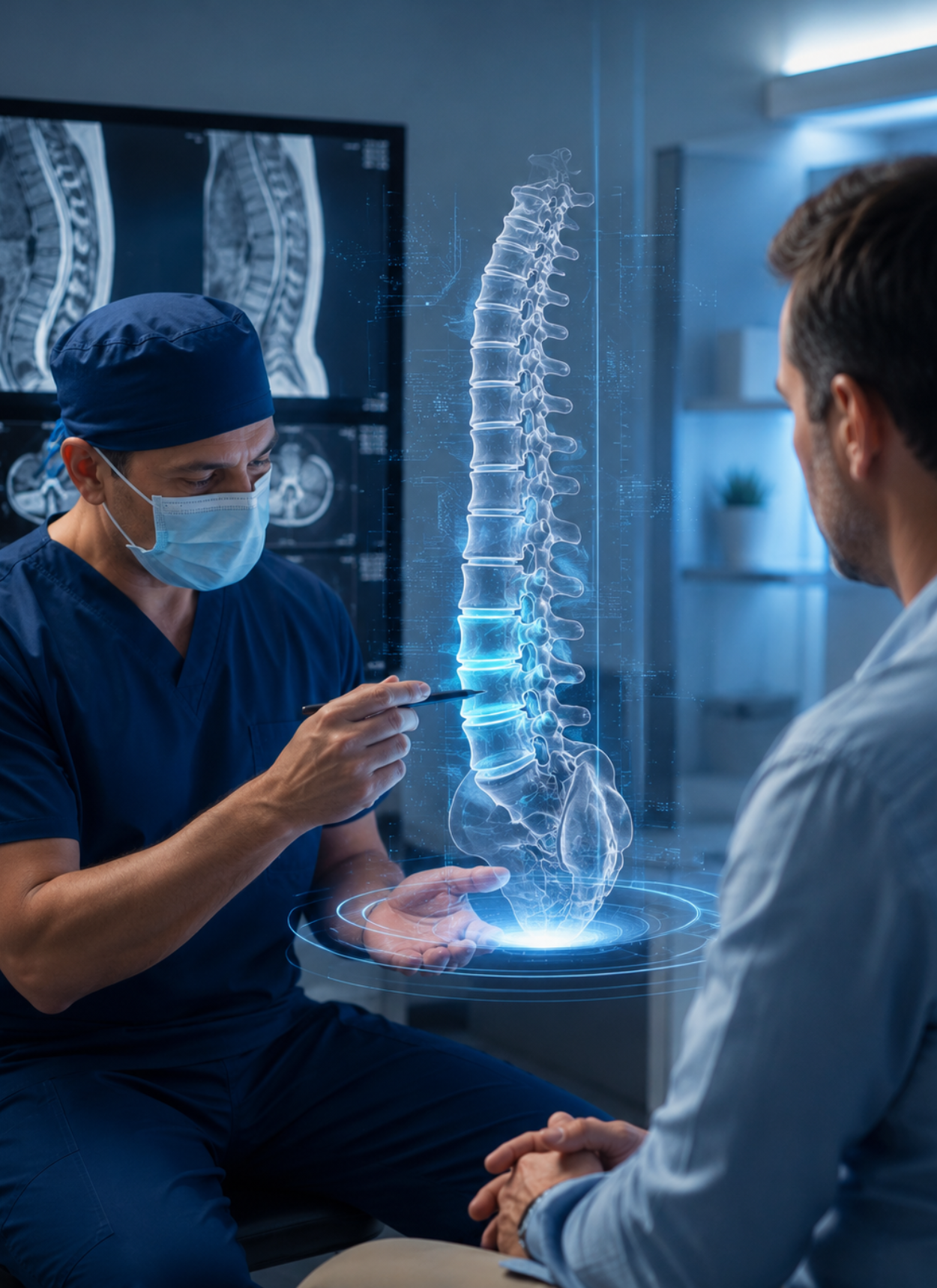

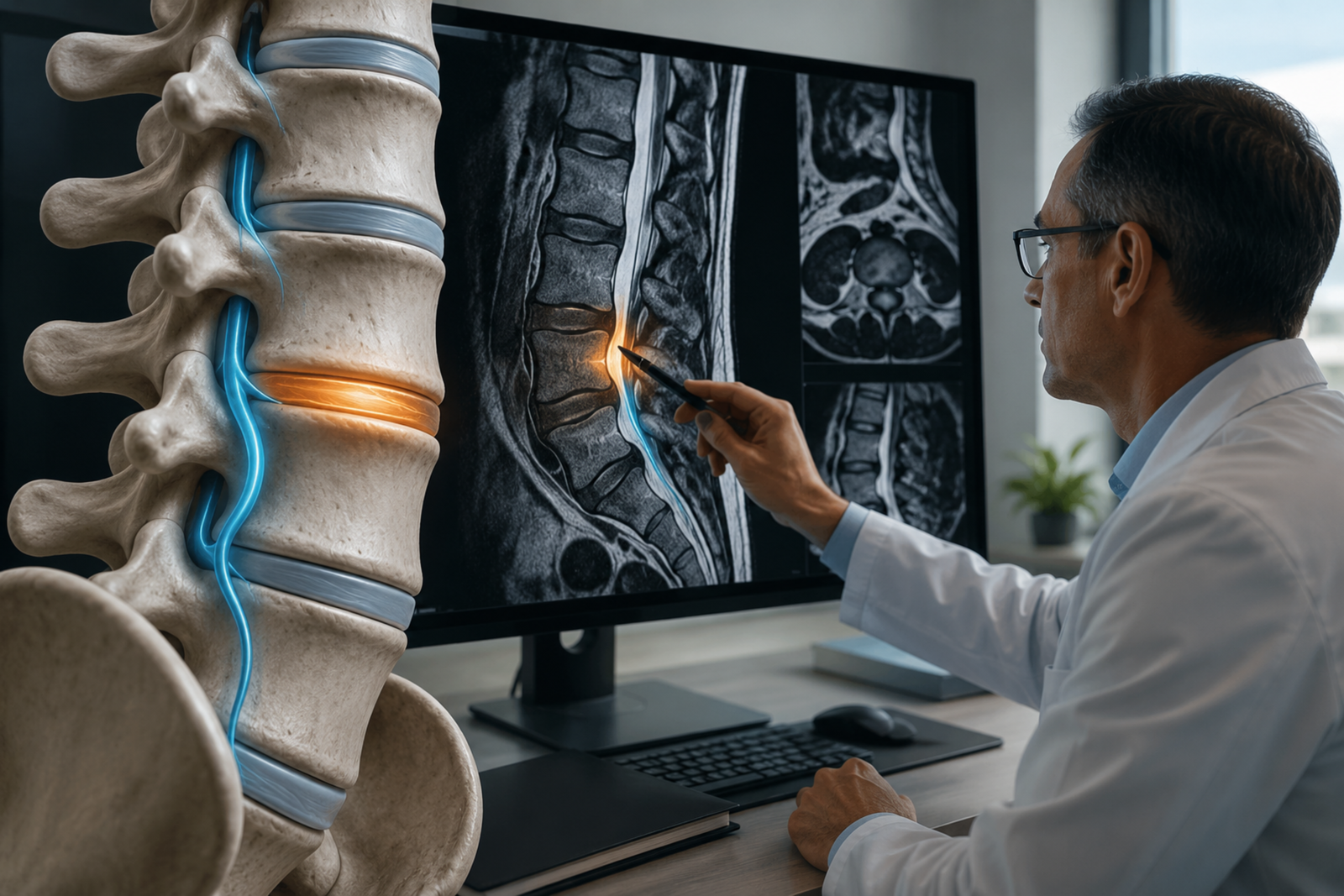
Disc Problems & Nerve Compression treatment focuses on diagnosing and managing spinal conditions in which damaged, bulging, or herniated discs place pressure on nearby nerves. These conditions can occur in the cervical, thoracic, or lumbar spine and may cause back or neck pain, pain radiating into the arms or legs, numbness, tingling, or muscle weakness. Treatment depends on the severity of symptoms and may include rest, activity modification, medication, physiotherapy, rehabilitation, or targeted procedures. When symptoms persist or significant nerve compression is present, surgical treatment may be considered. Advanced minimally invasive and endoscopic techniques can be appropriate for selected patients after detailed clinical and imaging evaluation.
Disc Problems & Nerve Compression
Disc Problems & Nerve Compression are common spinal conditions that can affect people of different ages. Intervertebral discs are soft, flexible structures located between the vertebrae of the spine. They act as cushions, absorb stress, and allow the spine to move comfortably. Over time, injury, degeneration, repetitive stress, or other factors can cause a disc to bulge, protrude, or herniate.
When a disc or another spinal structure presses against a nearby nerve, it can result in nerve compression. Depending on the location of the affected disc and nerve, patients may experience back pain, neck pain, radiating pain, numbness, tingling, or weakness in the arms or legs.
What Are Disc Problems?
Disc problems can occur in different forms. A disc may gradually lose its flexibility and height as part of degenerative changes. It may also develop a bulge or tear, allowing its inner material to protrude through the outer portion of the disc.
A herniated or slipped disc can sometimes press directly against a spinal nerve. However, not every disc bulge or herniation causes symptoms. Some people may have disc changes visible on an MRI without experiencing significant pain.
The relationship between imaging findings and symptoms is therefore important when determining the appropriate treatment.
What Is Nerve Compression?
The spinal cord and spinal nerves carry signals between the brain and the rest of the body. Nerves exit the spinal canal through small openings between the vertebrae. When a disc, bone growth, ligament, or other spinal structure narrows these spaces, the nerve may become compressed or irritated.
Nerve compression can occur in the cervical spine, affecting the neck and arms, or in the lumbar spine, potentially causing symptoms that travel into the buttocks and legs.
Common Symptoms
Symptoms depend on the location and severity of the nerve compression. Common symptoms may include:
- Neck or back pain
- Pain radiating into an arm or leg
- Numbness or tingling
- Burning or electric-like pain
- Muscle weakness
- Reduced sensation
- Difficulty with certain movements
- Difficulty standing or walking for prolonged periods
Some patients experience pain only, while others may develop neurological symptoms such as weakness or sensory changes.
Causes of Disc Problems and Nerve Compression
Several factors can contribute to disc-related problems. Natural age-related changes can cause discs to lose water and flexibility, making them more vulnerable to injury. Sudden lifting, twisting, falls, sports injuries, or repetitive physical activity may also contribute to disc problems.
Other factors such as poor posture, prolonged sitting, physical inactivity, and excess body weight may place additional stress on the spine.
In some patients, nerve compression may occur because of a combination of disc degeneration, bone changes, ligament thickening, and narrowing of the spinal canal or nerve passageways.
Diagnosis
Accurate diagnosis begins with a detailed clinical assessment. The spine specialist evaluates the patient's symptoms, medical history, duration of pain, and any changes in sensation, strength, or reflexes.
A physical and neurological examination can help identify the affected nerve and determine whether there are signs of significant compression.
Imaging may include X-rays, MRI scans, or CT scans. MRI is particularly useful for evaluating discs, nerves, the spinal canal, and other soft tissues. Imaging findings are considered together with the patient's symptoms and examination rather than being interpreted independently.
Non-Surgical Treatment
Many disc-related conditions improve with non-surgical treatment. Depending on the diagnosis, treatment may include activity modification, appropriate medication, physiotherapy, and structured rehabilitation.
Physiotherapy may focus on improving posture, flexibility, core strength, and movement patterns. A rehabilitation program can help patients gradually return to normal activities while reducing strain on the spine.
In selected cases, a specialist may recommend targeted injections to help manage pain and inflammation. The specific treatment depends on the underlying cause and the patient's medical history.
When Is Surgery Considered?
Surgery may be considered when symptoms remain persistent or significantly affect daily activities despite appropriate non-surgical treatment. It may also be recommended when there is significant nerve compression associated with progressive neurological problems or other structural concerns.
The type of surgery depends on the underlying condition. Procedures may include discectomy, decompression surgery, minimally invasive spine surgery, or endoscopic spine surgery in appropriately selected patients.
The purpose of surgery is generally to remove or address the structure causing nerve compression and create adequate space for the affected nerve.
Minimally Invasive and Endoscopic Treatment
Advances in spine surgery have made minimally invasive and endoscopic procedures available for selected disc and nerve-compression conditions.
These techniques use specialized instruments and smaller surgical openings to reach the affected area. Depending on the specific procedure, potential benefits may include reduced tissue disruption, smaller incisions, less blood loss, and potentially shorter recovery periods.
However, these techniques are not appropriate for every patient. The choice of surgical approach should be based on the patient's diagnosis, spinal anatomy, imaging findings, and overall medical condition.
Recovery and Rehabilitation
Recovery depends on the severity of the condition and the treatment performed. Patients receiving non-surgical treatment may improve gradually with appropriate rehabilitation and activity modification.
Following surgery, patients are usually advised to increase activity gradually according to their surgeon's instructions. Physiotherapy may be recommended to restore strength, flexibility, posture, and functional movement.
Patients should follow postoperative instructions and attend follow-up appointments to monitor recovery.
Conclusion
Disc Problems & Nerve Compression can cause significant pain and neurological symptoms when a damaged or degenerative disc affects nearby spinal nerves. Early and accurate evaluation can help identify the underlying cause and guide appropriate treatment.
Depending on the condition, management may range from physiotherapy and medication to advanced minimally invasive, endoscopic, or conventional surgical procedures. The treatment approach should always be individualized, with the goal of relieving symptoms, protecting nerve function, improving mobility, and helping patients return to their normal daily activities.