

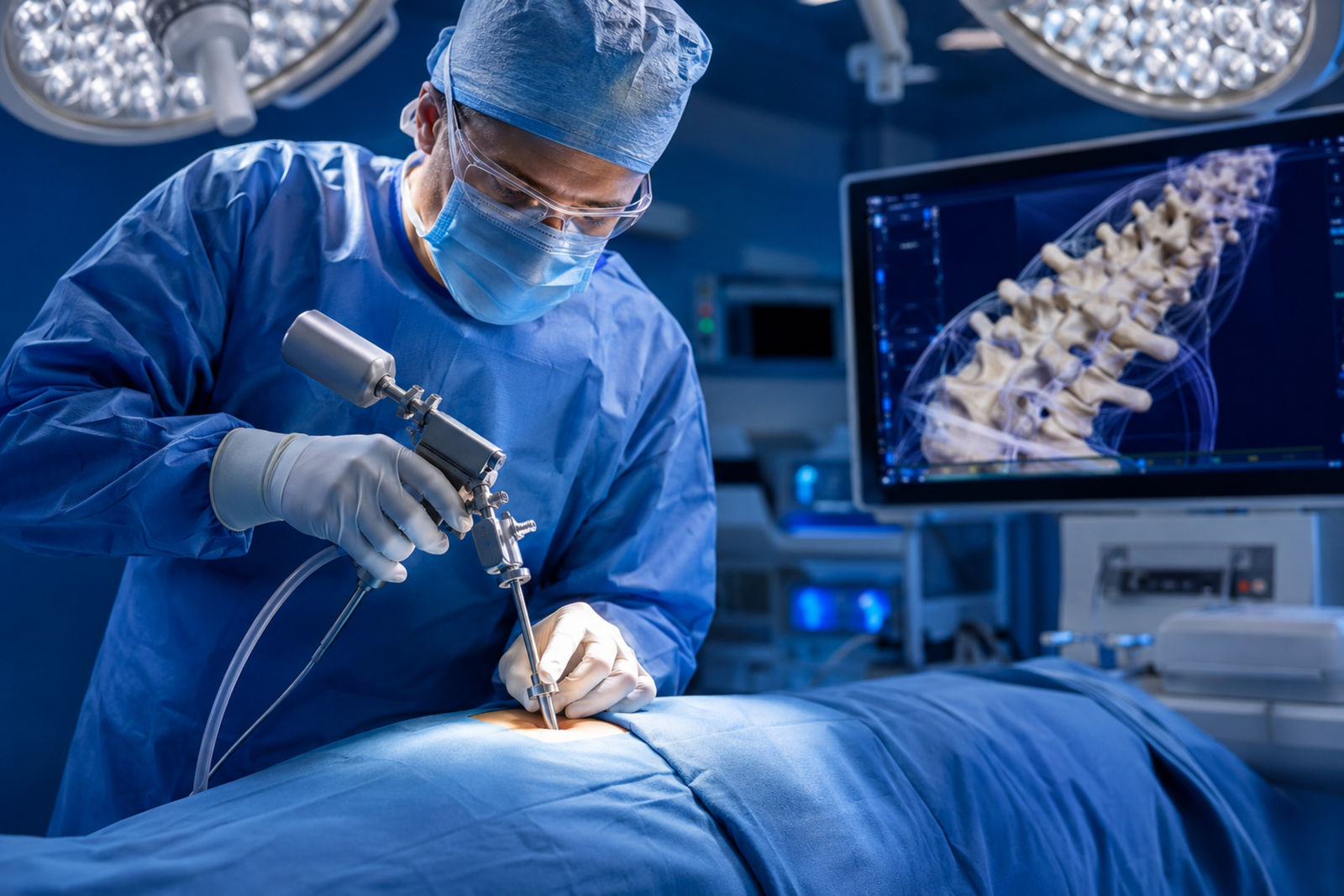
Minimally Invasive Spine Surgery (MISS) is an advanced surgical approach used to treat selected spinal conditions through smaller incisions and specialized instruments. Compared with traditional open surgery, MISS aims to minimize damage to the surrounding muscles and soft tissues while effectively addressing the underlying spinal problem. It may be considered for conditions such as herniated discs, spinal stenosis, nerve compression, and certain degenerative spine disorders. Depending on the condition, minimally invasive techniques can help reduce postoperative discomfort, blood loss, hospital stay, and recovery time. A detailed clinical evaluation and appropriate imaging are essential to determine whether minimally invasive spine surgery is suitable for an individual patient.
Minimally Invasive Spine Surgery
Minimally Invasive Spine Surgery (MISS) is an advanced approach to spinal surgery that uses specialized techniques, instruments, and smaller incisions to treat selected conditions affecting the spine. Unlike conventional open spine surgery, which may require greater exposure of the spinal structures, minimally invasive procedures are designed to reach the affected area while limiting disruption to the surrounding muscles, ligaments, and soft tissues. The primary objective is to effectively treat the underlying spinal problem while reducing unnecessary tissue trauma.
The spine is a complex structure made up of vertebrae, intervertebral discs, joints, ligaments, muscles, and nerves. Problems involving these structures can result in back pain, neck pain, stiffness, numbness, tingling, weakness, or difficulty walking. Conditions such as herniated or slipped discs, spinal stenosis, nerve compression, and certain degenerative spinal disorders may sometimes be treated using minimally invasive techniques.
What Is Minimally Invasive Spine Surgery?
Minimally invasive spine surgery uses smaller surgical openings and specialized instruments to access the affected portion of the spine. In some procedures, the surgeon uses a microscope, endoscope, or specialized imaging guidance to visualize the surgical area accurately.
The technique selected depends on the patient's diagnosis, symptoms, imaging findings, overall health, and the specific spinal level involved. Not every spinal condition is suitable for minimally invasive surgery, so careful assessment is important before recommending a procedure.
Conditions That May Be Treated
Minimally invasive techniques may be considered for several spinal conditions, including:
- Herniated or slipped discs
- Certain cases of spinal stenosis
- Nerve compression
- Degenerative disc disease
- Some lumbar and cervical spine conditions
- Selected spinal instability conditions
- Certain spinal fractures
- Some recurrent or persistent spinal problems
The appropriate treatment depends on the severity and cause of the condition. In many cases, non-surgical treatments such as physiotherapy, medication, activity modification, or targeted injections may be considered before surgery.
How Is the Procedure Performed?
Before surgery, the patient undergoes a detailed evaluation that may include a physical examination and imaging studies such as X-rays, MRI, or CT scans. These investigations help identify the exact source of symptoms and determine whether surgery is appropriate.
During minimally invasive surgery, the surgeon generally makes one or more small incisions rather than using a large incision. Specialized instruments are carefully introduced through these openings to reach the affected spinal area.
Depending on the procedure, the surgeon may remove a portion of a damaged disc, relieve pressure from a compressed nerve, remove bone or tissue causing spinal narrowing, or perform stabilization and fusion when clinically required.
Advanced visualization and imaging technologies can help the surgeon accurately identify the relevant anatomy and perform the procedure with precision.
Potential Advantages
One of the major goals of minimally invasive spine surgery is to reduce unnecessary disruption to the normal tissues surrounding the spine. Depending on the procedure and the patient's individual circumstances, potential benefits may include smaller incisions, less muscle disruption, reduced blood loss, and less postoperative discomfort.
Some patients may also experience a shorter hospital stay and an earlier return to normal activities compared with certain traditional surgical approaches. However, recovery varies considerably depending on the spinal condition, procedure performed, overall health, and individual healing response.
It is important to understand that minimally invasive surgery does not automatically mean that every patient will have a faster recovery or fewer complications. The most appropriate surgical technique should always be selected based on the patient's specific medical needs.
Recovery After Surgery
Recovery following minimally invasive spine surgery depends on the type and extent of the procedure. Some patients may be able to walk relatively soon after surgery, while others may require a longer period of supervised recovery.
The surgeon may recommend restrictions on lifting, bending, driving, or strenuous physical activity during the initial recovery period. Physiotherapy and guided exercises may also be recommended to improve mobility, strength, flexibility, and overall spinal function.
Patients should follow postoperative instructions carefully and attend scheduled follow-up appointments. Persistent or worsening pain, weakness, numbness, fever, wound problems, or other concerning symptoms should be reported promptly to the treating medical team.
Who May Be a Candidate?
Minimally invasive spine surgery is not appropriate for every patient. A person may be considered for MISS when symptoms are linked to a specific spinal condition that can be effectively addressed through a minimally invasive technique.
The decision is usually based on symptoms, physical examination, diagnostic imaging, response to previous treatments, and overall health. In some situations, conventional open surgery may provide a safer or more effective solution.
A spine specialist can evaluate the condition and explain the available treatment options, including their expected benefits, limitations, and potential risks.
Choosing the Right Spine Specialist
Successful spine treatment requires accurate diagnosis, appropriate patient selection, and careful surgical planning. A specialist experienced in minimally invasive spine techniques can assess whether the procedure is suitable and recommend the most appropriate treatment approach.
At every stage, the focus should be on treating the underlying spinal condition while maintaining the best possible functional outcome. Patients should discuss their symptoms, medical history, imaging reports, treatment expectations, and concerns with their spine specialist before making a surgical decision.
Minimally Invasive Spine Surgery represents an important advancement in modern spine care. When appropriately selected and performed by a trained spine surgeon, it can provide an effective treatment option for certain spinal conditions while aiming to minimize surgical disruption and support recovery.