Spine Conditions & Diagnosis
We diagnose and treat conditions such as slipped discs, spinal stenosis, sciatica, spondylolisthesis, spinal deformities, fractures, and other causes of back and neck pain.
Diagnosis typically includes a detailed medical history, physical examination, and, when needed, imaging such as X-rays, MRI, or CT scans.
You should consider an evaluation if back or neck pain persists, worsens, limits daily activities, or is associated with numbness, weakness, or radiating pain.
No. Many conditions can be managed with medicines, physiotherapy, exercise, lifestyle changes, and other non-surgical treatments. Surgery is considered when appropriate.
Your symptoms, medical history, physical condition, and diagnostic reports are reviewed to identify the underlying problem and develop a personalized treatment plan.
Back & Neck Pain Treatment
Back and neck pain can result from muscle strain, slipped discs, poor posture, spinal degeneration, nerve compression, injuries, or other spinal conditions.
Yes. Depending on the condition, treatment may include medication, physiotherapy, targeted exercises, lifestyle changes, and other conservative approaches.
Consult a spine specialist if pain persists, worsens, affects daily activities, or is accompanied by numbness, tingling, weakness, or pain spreading to the arms or legs.
Treatment is based on your symptoms, physical examination, medical history, and diagnostic imaging such as X-rays or MRI scans.
Maintaining good posture, staying physically active, strengthening core muscles, maintaining a healthy weight, and using proper lifting techniques can help protect your spine.
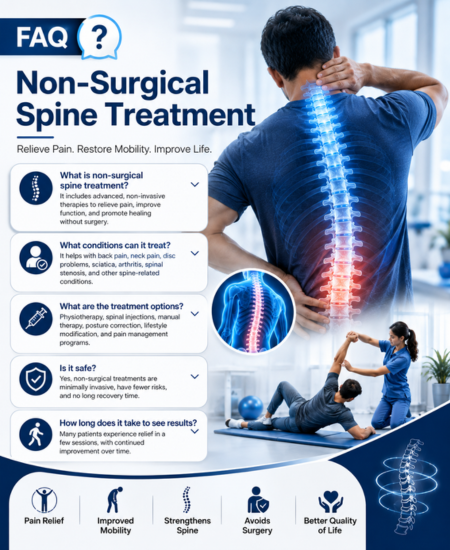
Non-Surgical Spine Treatment
It includes treatments such as medication, physiotherapy, therapeutic exercises, lifestyle changes, and selected pain-relief procedures to manage spine conditions without surgery.
It is often considered as an initial treatment when the condition does not require urgent surgery and symptoms can be managed conservatively.
Yes. A structured physiotherapy program can improve flexibility, strength, posture, and mobility while helping reduce pain.e
Recovery varies depending on the condition, severity of symptoms, and response to treatment. Your specialist can recommend an appropriate treatment duration.
If symptoms continue or worsen despite appropriate conservative treatment, your spine specialist may recommend further evaluation and discuss other treatment options, including surgery when necessary.
Spine Surgery & Recovery
Surgery may be considered when severe symptoms persist despite non-surgical treatment, or when there is significant nerve or spinal cord compression.
Spine surgery is performed using carefully planned techniques based on the patient's condition. Your surgeon will explain the potential benefits, risks, and expected outcomes before treatment.
Recovery varies depending on the type of surgery, overall health, and individual condition. Some patients resume normal activities within weeks, while others may require longer rehabilitation.
Post-surgery care may include medication, wound care, activity guidance, physiotherapy, and scheduled follow-up visits to monitor your recovery.
The timeline depends on the procedure and your recovery progress. Your surgeon will provide personalized guidance on returning to work, exercise, driving, and daily activities.
Post-Surgery Care & Rehabilitation
Rehabilitation helps restore strength, flexibility, mobility, and confidence while supporting a safe and gradual return to daily activities.
The timing depends on the type of surgery and your recovery. Your surgeon will recommend when it is appropriate to begin physiotherapy and exercises.
You may need to temporarily avoid heavy lifting, strenuous exercise, bending, or twisting. Your surgeon will provide specific activity restrictions.
Follow your medication and activity instructions, attend scheduled follow-ups, maintain good posture, gradually increase activity, and complete recommended rehabilitation exercises.
Contact your healthcare team if you experience worsening pain, new weakness or numbness, fever, wound problems, or other unusual symptoms during recovery.